Understanding of UV Technology
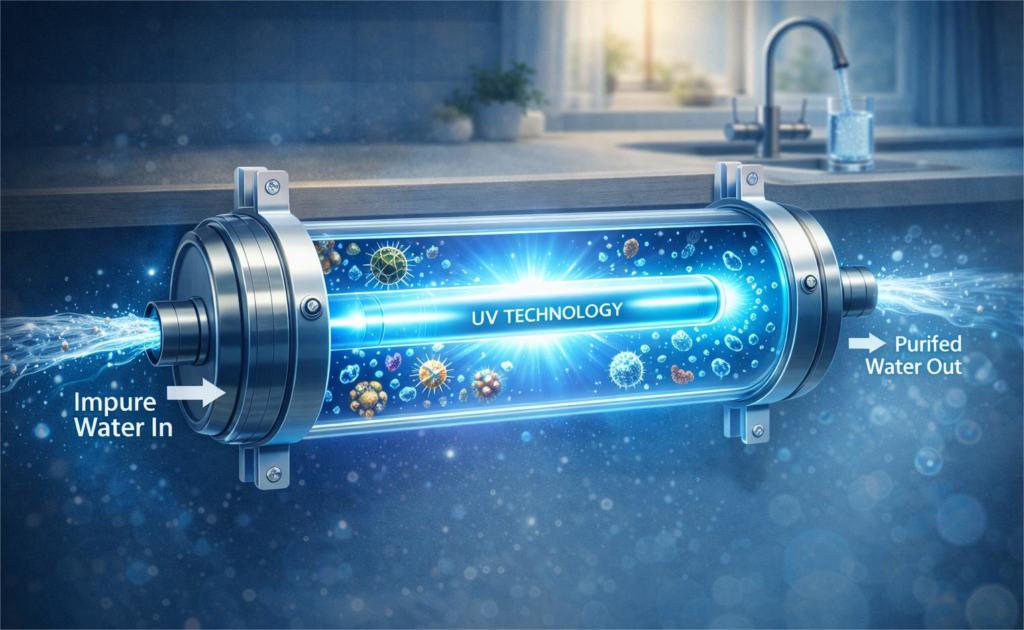
UV (Ultraviolet) water purification technology is an advanced method that uses ultraviolet light to disinfect water by neutralizing harmful microorganisms. Unlike chemical treatments, UV technology doesn’t alter the taste or chemical composition of water. When water passes through a UV purifier, the UV light penetrates the cells of bacteria, viruses, and other pathogens, destroying their DNA and rendering them inactive. This ensures the water is microbiologically safe and suitable for drinking without the use of harmful chemicals.
UV systems are highly efficient and environmentally friendly, providing instant disinfection without leaving any residue. They are often integrated into home and commercial water purifiers alongside pre-filters or RO systems to provide comprehensive protection against both biological and chemical impurities. UV technology is particularly effective in areas where water sources are prone to microbial contamination, offering peace of mind for households and businesses alike.
Adopting a UV water purifier enhances health and safety by preventing waterborne diseases while maintaining the natural taste of water. Modern UV purifiers are compact, energy-efficient, and easy to install, making them a popular choice for homes seeking a reliable, chemical-free water treatment solution. When combined with technologies like RO or water softening systems from companies like HydroGenix, UV purification ensures water that is not only safe but also pure and refreshing.