Understanding Reverse Osmosis (RO) Systems
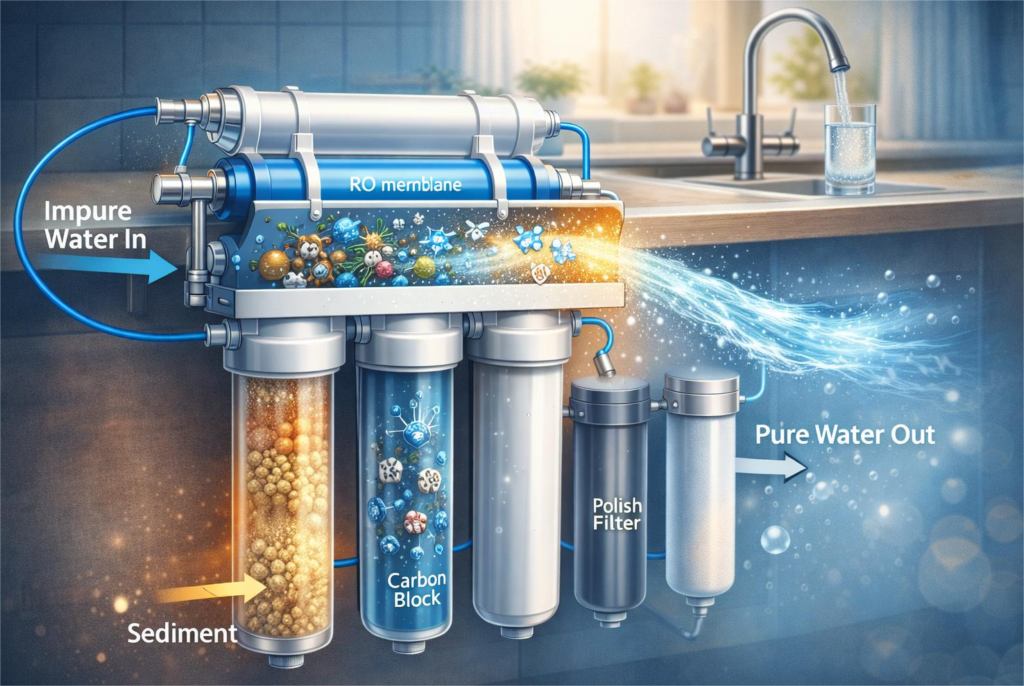
Reverse Osmosis (RO) is a highly effective water purification process that removes impurities, contaminants, and dissolved solids from water. Unlike traditional filters, RO uses a semi-permeable membrane to separate pure water from harmful substances such as heavy metals, salts, bacteria, and chemicals. Water is pushed through the membrane under pressure, allowing only clean water molecules to pass while leaving pollutants behind. This ensures that the water you consume is not only safe but also tastes fresh and clean.
RO systems typically consist of multiple stages, including pre-filters, the RO membrane, and post-filters. The pre-filters remove larger particles like sediment and chlorine, protecting the membrane. The RO membrane then removes dissolved solids and harmful contaminants. Finally, post-filters polish the water to enhance taste and quality. This multi-stage purification ensures that the water meets high standards for drinking and cooking.
By adopting an RO system, households and businesses can ensure a continuous supply of pure water while protecting appliances and improving health. RO systems are especially beneficial in areas with hard water or water sources containing high levels of dissolved impurities. With their efficiency and reliability, RO water purifiers have become an essential technology for modern homes, complementing other water-softening and purification solutions like those provided by HydroGenix.